5 Ways to Bring the Structure of a Wellness Retreat Schedule Back Into Your Regular Week
Quick Answer: Retreats work partly because of their structured rhythm — set wake times, phone-free blocks, and intentional transitions between activities — and recreating even a scaled-down version of that structure at home, rather than trying to copy specific retreat activities, is what actually carries the benefit forward.
Most people come home from a retreat trying to keep doing the exact activities, and lose the calm within a week. The rhythm, not the activities, was doing most of the work.

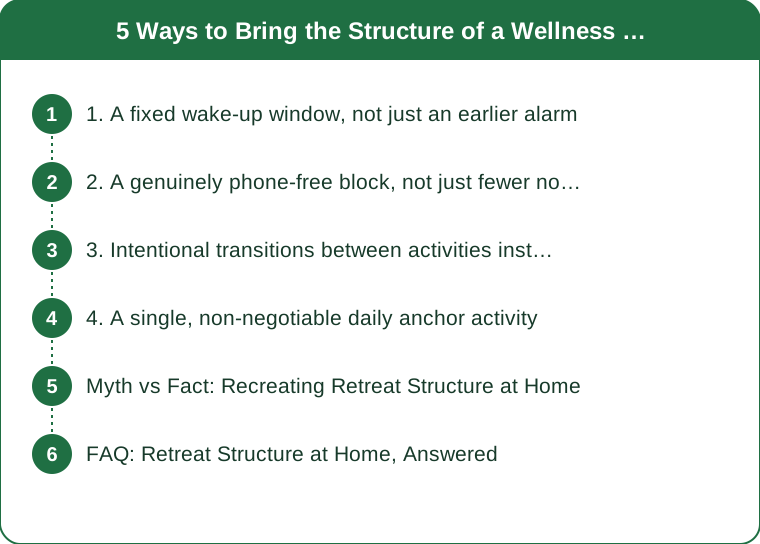
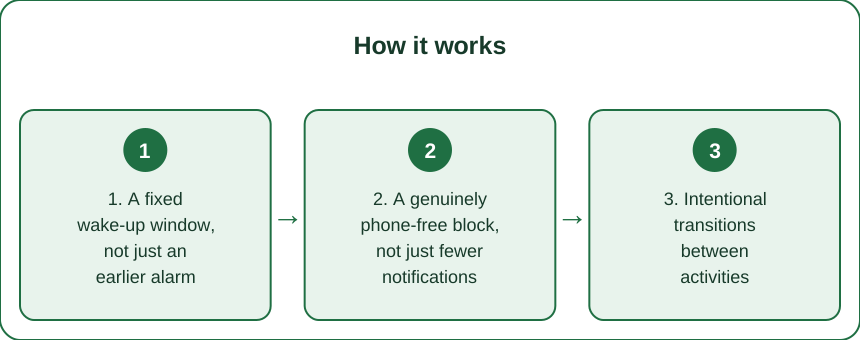
1. A fixed wake-up window, not just an earlier alarm
Retreats typically use a consistent wake time every single day, which regulates your body’s internal clock far more effectively than an occasional early morning. Picking one wake time and holding it even on weekends recreates this specific structural piece.
2. A genuinely phone-free block, not just fewer notifications
Retreats often build in a full hour or more with phones physically put away, not just silenced, which changes the mental experience of that time compared to a phone nearby on silent. Choosing one recurring daily block — often the first 30-60 minutes after waking — to physically separate from your phone recreates this.
3. Intentional transitions between activities instead of task-switching
A retreat schedule builds in a few quiet minutes between each activity, rather than moving straight from one task to the next, which reduces the mental residue that carries over and makes each activity feel more contained. A two-minute pause between meetings or tasks at home, even just standing up and stretching, recreates a version of this.

4. A single, non-negotiable daily anchor activity
Most retreats have one activity everyone does together at a fixed time, which creates a reliable structural anchor for the day. At home, this could be a consistent daily walk, a set dinner time, or an evening wind-down — the specific activity matters less than its fixed, non-negotiable placement.
Myth vs Fact: Recreating Retreat Structure at Home
Myth: You need to recreate the exact activities from your retreat to keep the benefit. Fact: The underlying rhythm and structure matter more than the specific activities themselves.
Myth: A phone-free block only counts if it’s an hour or more, like at a retreat. Fact: Even 20-30 minutes of a genuinely phone-free routine at home provides a meaningful version of the same benefit.
Myth: Retreat structure only works because you’re away from normal responsibilities. Fact: Scaled-down versions of the same structural elements show real benefit even within a normal, responsibility-filled week.
FAQ: Retreat Structure at Home, Answered
How long does it typically take to feel the effect of these structural changes?
Most people notice a difference in daily calm and focus within 1-2 weeks of consistently applying even two or three of these structural elements.
What if my schedule genuinely can’t accommodate a fixed wake time every day?
Even holding a consistent wake time on most days, with occasional flexibility, still provides most of the circadian benefit compared to no consistency at all.
Should I try to add all five structural elements at once?
Starting with one or two — most people begin with the phone-free block and fixed wake time — tends to stick better than attempting a full overhaul immediately.
TL;DR:
- Retreats work largely through structural rhythm, not just the specific activities involved
- A fixed wake time, genuine phone-free block, intentional transitions, and a daily anchor activity all transfer well
- Scaled-down versions of these elements still provide real benefit within a normal week
- Starting with one or two structural pieces tends to stick better than a full overhaul
The calm you felt on retreat wasn’t magic — it was structure, and structure is something you can rebuild piece by piece, right in your regular week.
Keep Reading
This article is for general informational and styling purposes only. Fit, sizing, and product availability may vary.