5 Signs a Wellness Retreat Schedule Is Actually Designed for Relaxation
Quick Answer: A genuinely relaxing retreat schedule typically includes real unstructured downtime (not just short breaks between activities), a reasonable number of daily sessions rather than a packed itinerary, flexible or optional participation, adequate sleep windows, and gradual rather than jam-packed transitions — checking the actual hour-by-hour schedule before booking reveals more than the marketing photos do.
The brochure shows someone in a hammock at golden hour, looking utterly unbothered. The actual schedule, buried three pages deep in the confirmation email, shows six back-to-back sessions from 6am to 9pm. Only one of those documents tells you what the week will actually feel like.

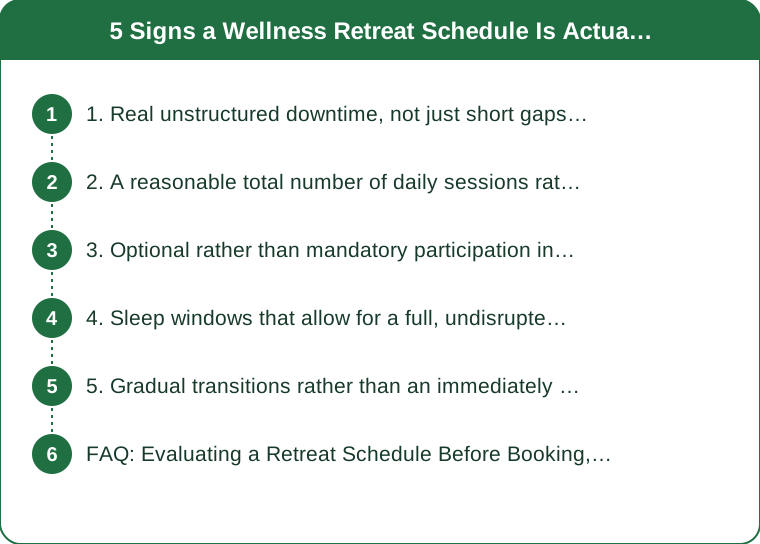
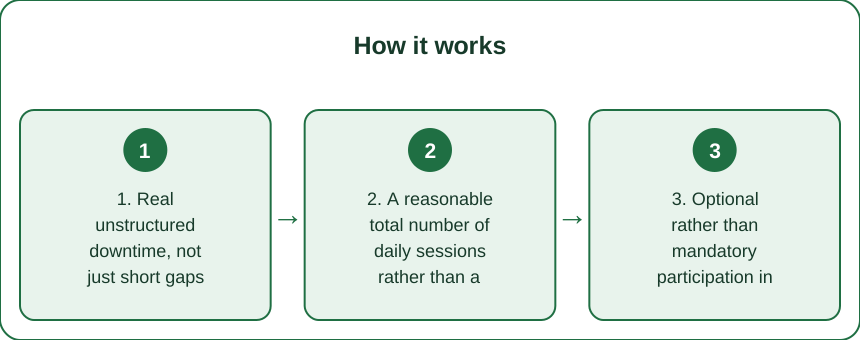
1. Real unstructured downtime, not just short gaps between activities
A schedule with genuine 90-minute-plus blocks of truly free time (not just 15 minutes to change clothes between sessions) allows for actual rest and personal processing time, which is meaningfully different from a schedule that’s technically not double-booked but still keeps every hour accounted for with some structured activity.
2. A reasonable total number of daily sessions rather than a packed lineup
Retreats aiming for genuine relaxation typically offer three to four sessions or activities per day at most, while retreats with six or more daily sessions — even if each one is individually framed as relaxing, like multiple yoga classes plus workshops plus group activities — tend to produce cumulative fatigue that undermines the overall restorative goal, regardless of how calm each individual session looks.
3. Optional rather than mandatory participation in most activities
A schedule that frames most sessions as optional, with a clear understanding that skipping any given activity to rest instead is genuinely fine, tends to reduce the subtle pressure to attend everything that can turn a retreat into another obligation-filled schedule rather than a break from one.

4. Sleep windows that allow for a full, undisrupted night
Checking whether the schedule includes early-morning mandatory sessions (like a 5:30am sunrise activity) paired with late-evening programming reveals whether the retreat is actually protecting sleep, since consistently short sleep windows undermine the physical recovery that’s often a core part of why people book a wellness retreat in the first place.
5. Gradual transitions rather than an immediately packed arrival day
Retreats that ease into the schedule with a lighter first day, rather than launching straight into a full day of programming on arrival (often after travel), tend to support better overall adjustment and relaxation than those that treat day one identically to every other day.
FAQ: Evaluating a Retreat Schedule Before Booking, Answered
Is it reasonable to ask a retreat organizer for the detailed daily schedule before booking?
Yes — this is a completely standard and reasonable request, and a retreat confident in its pacing should be able to provide a realistic hour-by-hour itinerary rather than only marketing materials.
Does a retreat with fewer daily activities cost less, or is packed programming actually a premium feature?
This varies by retreat and isn’t a reliable indicator either way — pricing often reflects accommodations, location, and instructor quality more than activity density, so a less-packed schedule shouldn’t automatically be assumed to be a lower-value option.
What’s a reasonable red flag versus a reasonable green flag when scanning a sample schedule?
A red flag is six or more structured sessions daily with minimal free blocks and early-to-late programming; a green flag is three to four sessions with clearly marked free time, optional participation framing, and protected sleep windows.
TL;DR:
- Genuine unstructured downtime, not just gaps between sessions, is a key sign of a relaxation-focused schedule
- Three to four daily sessions tends to support rest better than six or more, regardless of each session’s individual tone
- Optional participation reduces the subtle pressure that can turn a retreat into another obligation
- Protected sleep windows and a gradual first day both matter more than the marketing photos suggest
The hammock photo isn’t lying, exactly — it’s just not the whole schedule. Checking the actual hour-by-hour itinerary before booking is the real way to tell whether a retreat is built for rest or just built to look restful.
Keep Reading
This article is for general informational and styling purposes only. Fit, sizing, and product availability may vary.