5 Signs a Wellness Retreat Is Actually Worth the Money (Before You Book It)
Quick Answer: A worthwhile retreat has a clear, specific daily structure (not just vague “relaxation”), a realistic group size, transparent pricing with no major hidden add-ons, and instructor or facilitator credentials you can actually verify — vague itineraries and unverifiable claims are the biggest red flags.
You’ve bookmarked a dozen retreats that all look identical in their photos — soft linens, an infinity pool, someone meditating at sunrise — and have no real way to tell which ones will actually be worth what they cost.

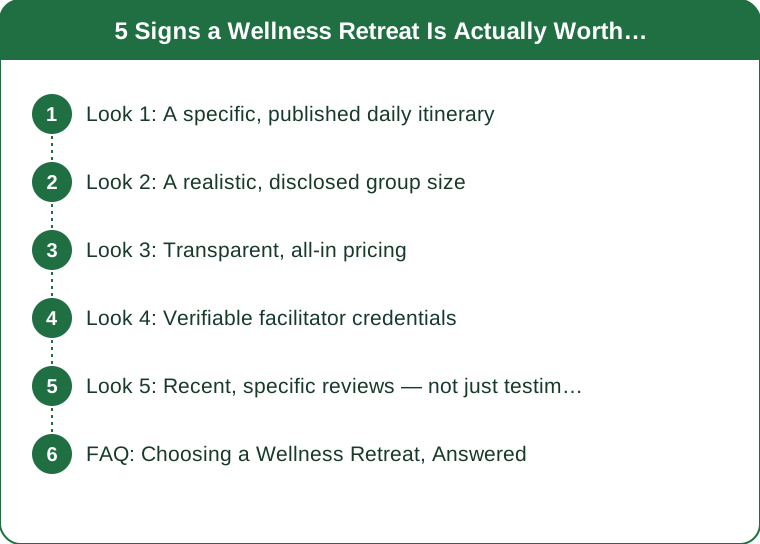
Look 1: A specific, published daily itinerary
Retreats worth the money publish an actual hour-by-hour or session-by-session schedule before you book, not just a vague list of amenities. If a retreat’s website only shows lifestyle photos without a real structure of what each day involves, that’s often a sign the experience itself is thin and the marketing is doing the heavy lifting instead.
Look 2: A realistic, disclosed group size
Group size significantly affects the actual experience — a retreat capped at 12-15 people delivers a fundamentally different (usually more attentive) experience than one that doesn’t disclose numbers and turns out to have 60+ attendees. Retreats confident in their value are usually upfront about group size because it’s a genuine selling point, not something to hide.
Look 3: Transparent, all-in pricing
Watch for retreats that advertise a low headline price but layer on mandatory add-ons (specific meals, transportation, certain activities) that aren’t clear until after deposit. A retreat that lists what’s genuinely included versus optional upfront, with a realistic total cost, is a stronger signal of a well-run operation than an eye-catching low starting price.

Look 4: Verifiable facilitator credentials
A quick search should confirm that instructors or facilitators have the training and experience they claim, especially for anything involving physical practice (yoga, fitness) or wellness guidance. Retreats that list only first names or vague titles without any way to verify background are a meaningful red flag, not a minor omission.
Look 5: Recent, specific reviews — not just testimonial quotes
Testimonial quotes curated by the retreat itself are the least reliable signal — look instead for recent, independent reviews on third-party platforms that mention specific details (food quality, facilitator names, actual schedule adherence) rather than only generic praise, which is a much stronger indicator of what you’ll actually experience.
FAQ: Choosing a Wellness Retreat, Answered
Is a higher price always a sign of a better retreat?
Not necessarily — price often reflects location and amenities more than program quality; a well-structured, smaller retreat at a modest price can outperform an expensive one with a thin schedule.
How far in advance should you book to get the best value?
Early booking often comes with lower pricing and better room or session availability, but rushing into an early-bird deal without verifying the five signs above isn’t worth the discount.
Should you contact the retreat directly with questions before booking?
Yes — a retreat organizer’s responsiveness and willingness to answer specific questions about schedule, group size, and facilitator background before you book is itself a useful signal about how the actual retreat will be run.
TL;DR:
- Look for a specific published itinerary, not vague relaxation promises
- Disclosed, realistic group size affects the actual experience significantly
- Transparent all-in pricing beats a low headline price with hidden add-ons
- Verify facilitator credentials and read specific third-party reviews, not curated quotes
Keep Reading
This article is for general informational and styling purposes only. Fit, sizing, and product availability may vary.